New post with my favorite books from 2024 along with updates to my reading system. My year in books for 2024.
Check out my separate reading blog for an index of book reviews and ratings.
New post with my favorite books from 2024 along with updates to my reading system. My year in books for 2024.

Finished reading: Rousseau and Revolution by Will Durant 📚
The tenth volume of the Story of Civilization by Will and Ariel Durant. This one provides an immensely readable history of Europe leading up to the French Revolution. This series has been such an education. ★★★★★

Finished reading: The Work of Art by Adam Moss 📚

Finished reading: The Comfort of Crows by Margaret Renkl 📚

Finished reading: The Wood at Midwinter by Susanna Clarke 📚
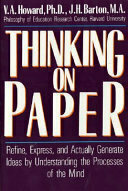
Finished reading: Thinking on Paper by V.A. Howard, J.H. Barton 📚

Finished reading: James by Percival Everett 📚

Finished reading: A Rage in Harlem (Special Edition) by Chester Himes 📚
What a crazy rollercoaster ride through Harlem in the 1950s. I’m just now catching my breath! ★★★★☆

Finished reading: Needful Things by Stephen King 📚
This one missed the mark for me. Too many characters — almost the entire town of Castle Rock. With so many, I had a hard time connecting with any of them. Any other author would get a two stars, but King gets a pass. ★★★☆☆

Finished reading: A System for Writing by Bob Noto 📚
A guide to the Zettelkasten method of note-taking. Writing and linking atomic notes feels so non-intuitive and…nutty? The examples late in the book of the poor quality of published books compiled from atomic notes did not help the cause. ★★★☆☆

Finished reading: The Age of Voltaire by Will Durant 📚
Continuing my quest to read all eleven volumes of Will Durant’s Opus, The Story of Civilization. Volume IX centers on science and philosophy overtaking religion through thinkers like Voltaire and Diderot. The church did its best to stop it, but in the end, the French Enlightenment steered the faithful away from religion toward the beginnings of existentialism. While this movement addressed religious corruption and the horrors of inquisitions, there is also a feeling of great loss as civilization let go of its rudder of morality and faith. ★★★★★

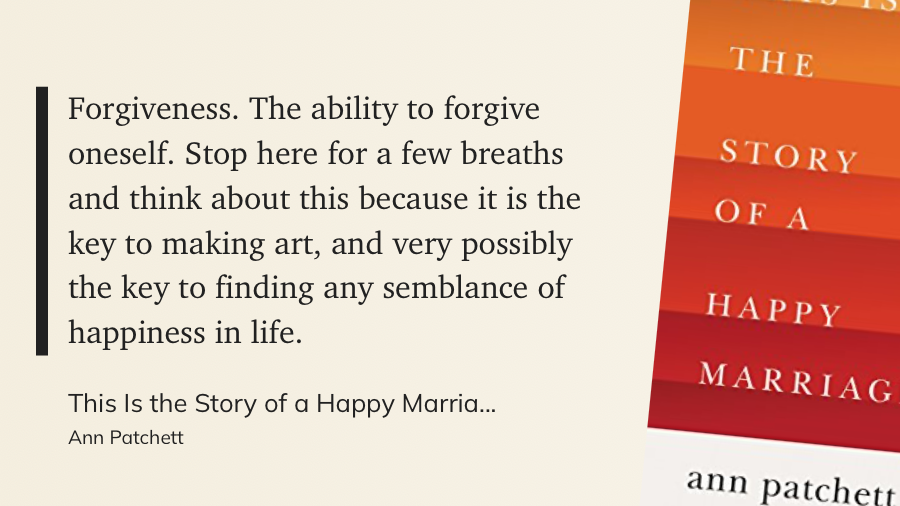
Finished reading: This Is the Story of a Happy Marriage by Ann Patchett 📚
I came for the essays on the craft of writing, but stayed for her views on RV life, dogs, opera, marriage, friendship, etc. An eclectic collection, but all Ann Patchett. What a writer. ★★★★☆

Finished reading: The Spectator Bird by Wallace Stegner 📚
A poignant novel on retirement, the fleetingness of life, and all those many paths not taken. One to savor. ★★★★★

Finished reading: The Elephant Whisperer by Anthony Lawrence 📚
I enjoyed these episodic adventures in the wilds of South Africa amongst elephants and the incredible struggle to preserve and cohabitate with these massive and intelligent animals. An Immense World by Ed Yong introduced me to the ways in which elephants see the world from a scientific basis. Here, the author tells the story from practical experience.
Anthony is a good storyteller. Much of the book feels more like a suspense novel than memoir. The writing isn’t great, but the stories are good enough to look past that.
What I didn’t expect was the sadness mixed in with the joy. There were hard losses sprinkled throughout the book that spoke to the necessary interchange between growth and decline, life and death. I was pretty emotional at the end with the loss of two brave souls, one then the other.
I was saddened to learn that Anthony passed away a few short years after publishing this book. May he rest in peace with the knowledge of the incredible legacy he left behind. ★★★★☆
Currently reading: This Is the Story of a Happy Marriage by Ann Patchett 📚

Finished reading: Spook Street by Mick Herron 📚
The fourth Slow Horses book was fun. These books follow a formula, yet are so well written. Now I can watch the Apple TV version … ★★★★☆

Finished reading: The Age of Louis XIV by Will Durant 📚
My straight-through reading of this mammoth 11-volume history continues. Volume VIII shares a detailed view of Europe in the 17th Century. So much war and bloodshed and atrocity, and yet brilliance too.
From Durant:
Let us agree that in every generation of man’s history, and almost everywhere, we find superstition, hypocrisy, corruption, cruelty, crime, and war: in the balance against them we place the long roster of poets, composers, artists, scientists, philosophers, and saints. That same species upon which poor Swift revenged the frustrations of his flesh wrote the plays of Shakespeare, the music of Bach and Handel, the odes of Keats, the Republic of Plato, the Principia of Newton, and the Ethics of Spinoza; it built the Parthenon and painted the ceiling of the Sistine Chapel; it conceived and cherished, even if it crucified, Christ. Man did all this; let him never despair.

Finished reading: Somehow by Anne Lamott 📚
I loved Lamott’s Bird by Bird memoir on the writing craft. The writing here was good, but forced. Too many similes, too many quotes from others. Great life advice: be kind to yourself & others, all we need is love, etc., but too much hand-wringing. ★★★☆☆
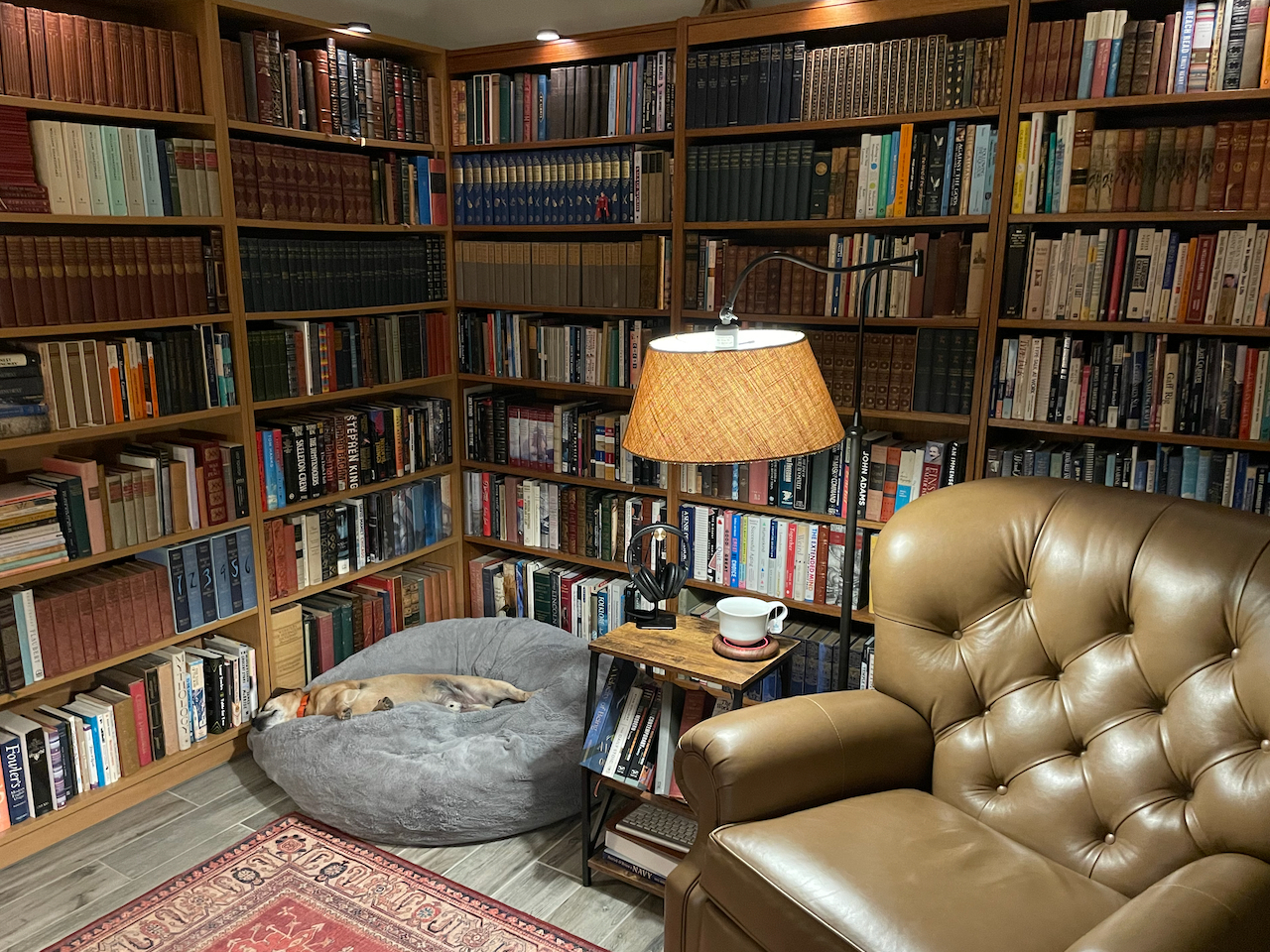
Book-wrapt — that beneficent feeling of being wholly imbooked, beshelved, inlibriated, circumvolumed, peribibliated …
— The Private Library by Reid Byers 📚

Finished reading: Table for Two by Amor Towles 📚
I’ll read anything that Amor Towles writes. He’s one of my favorite living writers. This collection of six short stories and a novella hit the mark, though each left me wanting more, to know happens next. A master storyteller. ★★★★★
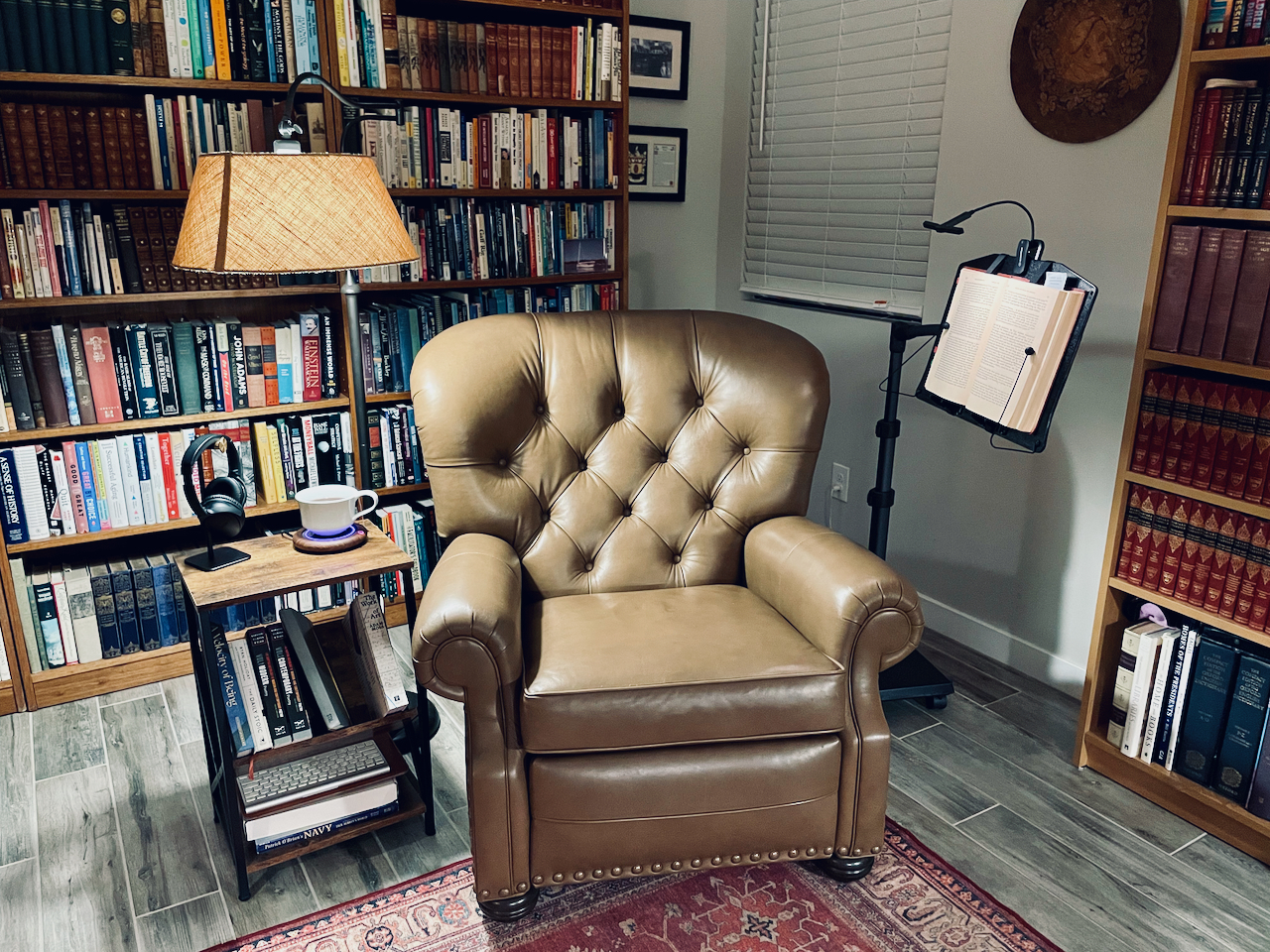
I was getting tension headaches from too many hours of looking down at a book at night, so I bought this Levo book stand. It holds the book securely and rotates into any position I need, even fully reclined. Expensive, but worth it. Headaches are gone!
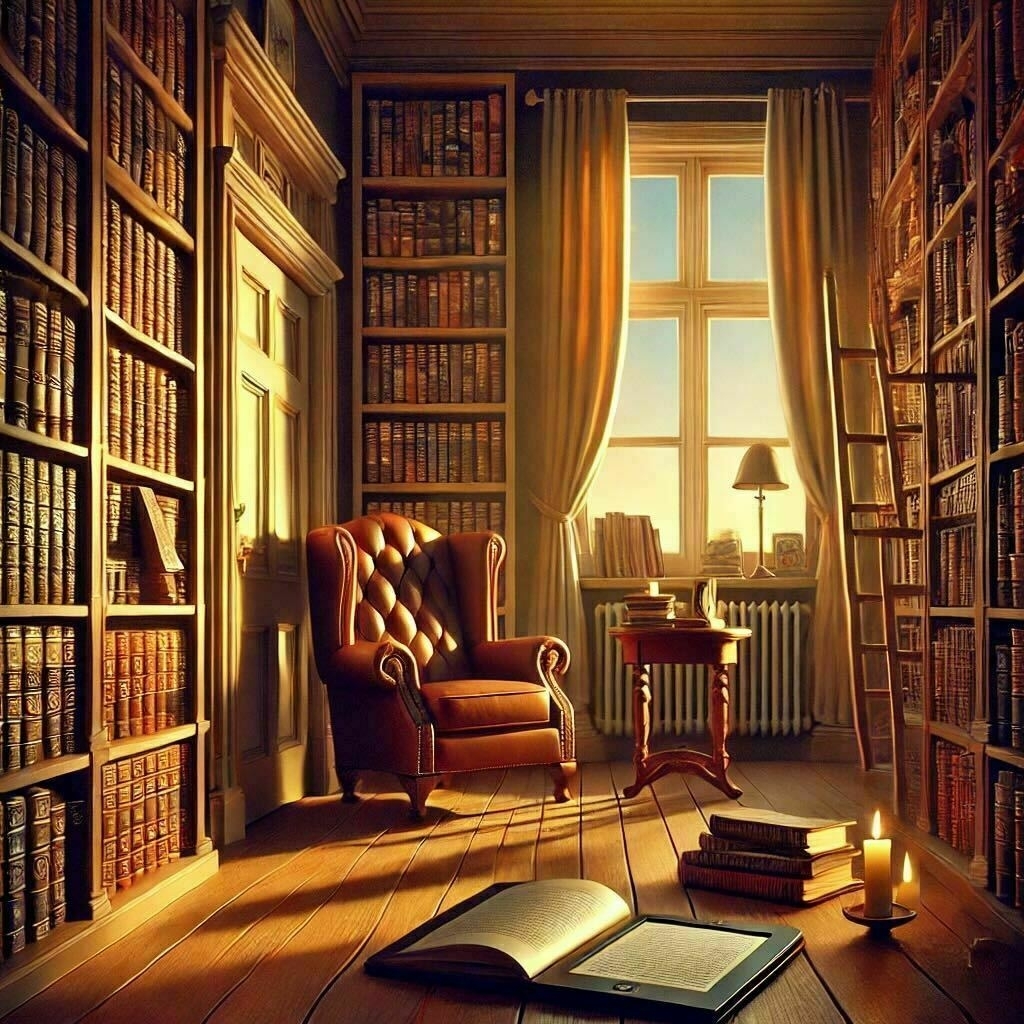
For fun, I asked ChatGPT to create a cover image for an essay I wrote. The essay mentions old books and a Kindle: note the hybrid book/eReader lit by candlelight, and how the leather wing chair barricades the door. “Don’t bother me, I’m reading,” it seems to suggest. ❤️❤️❤️
Currently reading: Somehow by Anne Lamott 📚

Finished reading: The Public Library by Robert Dawson 📚
Currently reading: The Public Library by Robert Dawson 📚
Currently reading: Table for Two by Amor Towles 📚

Finished reading: The Queen’s Gambit by Walter Tevis 📚
Who knew a book about Chess could be so intense! This was a great, great book. ★★★★★
Currently reading: The Queen’s Gambit by Walter Tevis 📚

Finished reading: City of Glass by Paul Auster 📚
A strange meta-detective novel with an unreliable narrator who slowly dissolves into insanity. I followed maybe half of the literary and Biblical allusions. Not at all what I expected, but oddly satisfying.
Currently reading: The Age of Louis XIV by Will Durant 📚